


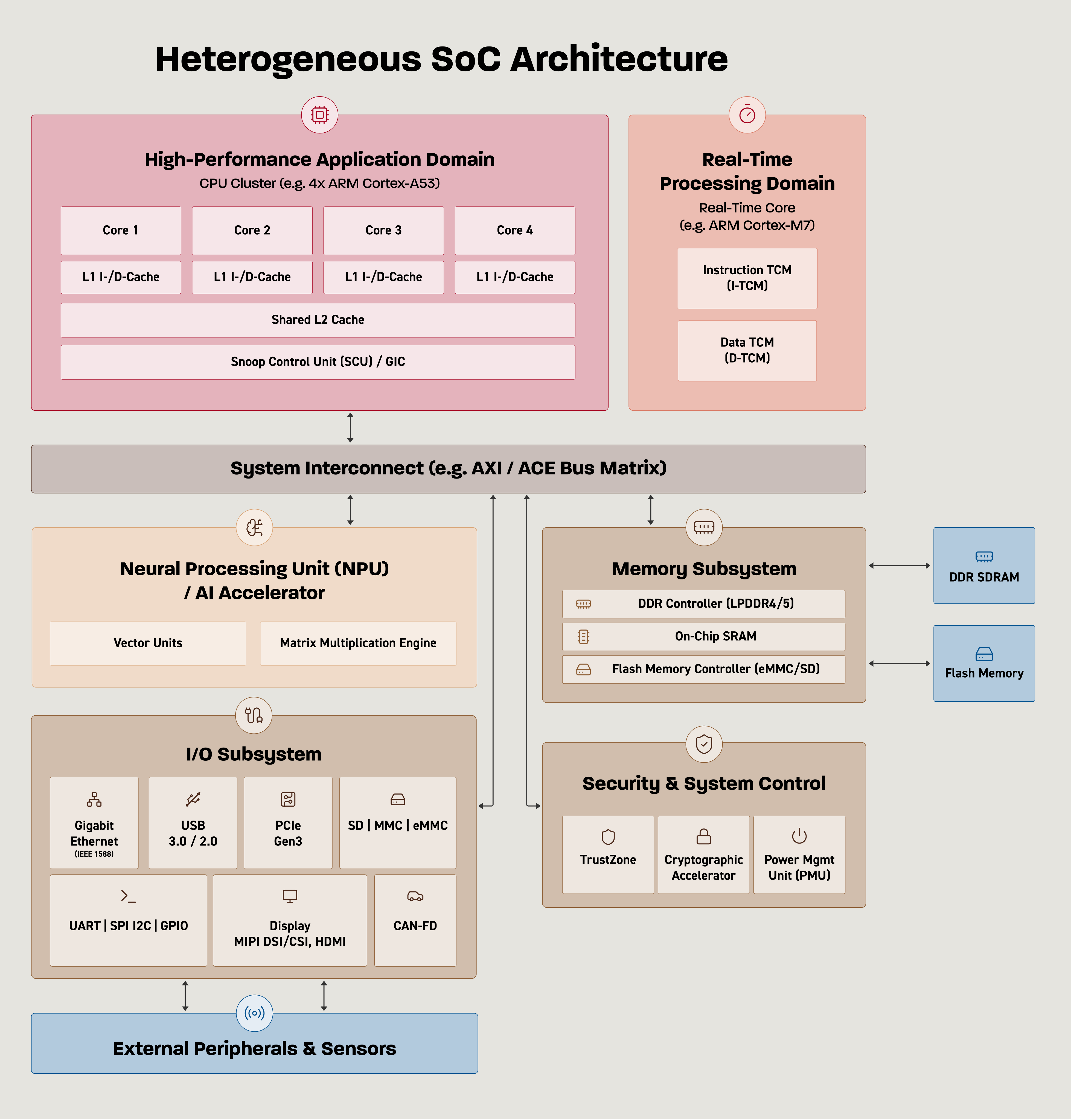
Block diagram of a representative heterogeneous SoC, showing the application CPU cluster, real-time core, NPU/AI accelerator, and key I/O subsystems.
A System on Chip (SoC) is a single integrated circuit that combines a CPU, memory controllers, I/O interfaces, and often specialized processing cores on one silicon die. In embedded hardware design, the SoC is the architectural foundation of the entire system. Processor architecture, peripheral selection, power budget, thermal envelope, and long-term supply availability all stem from a single early component decision.
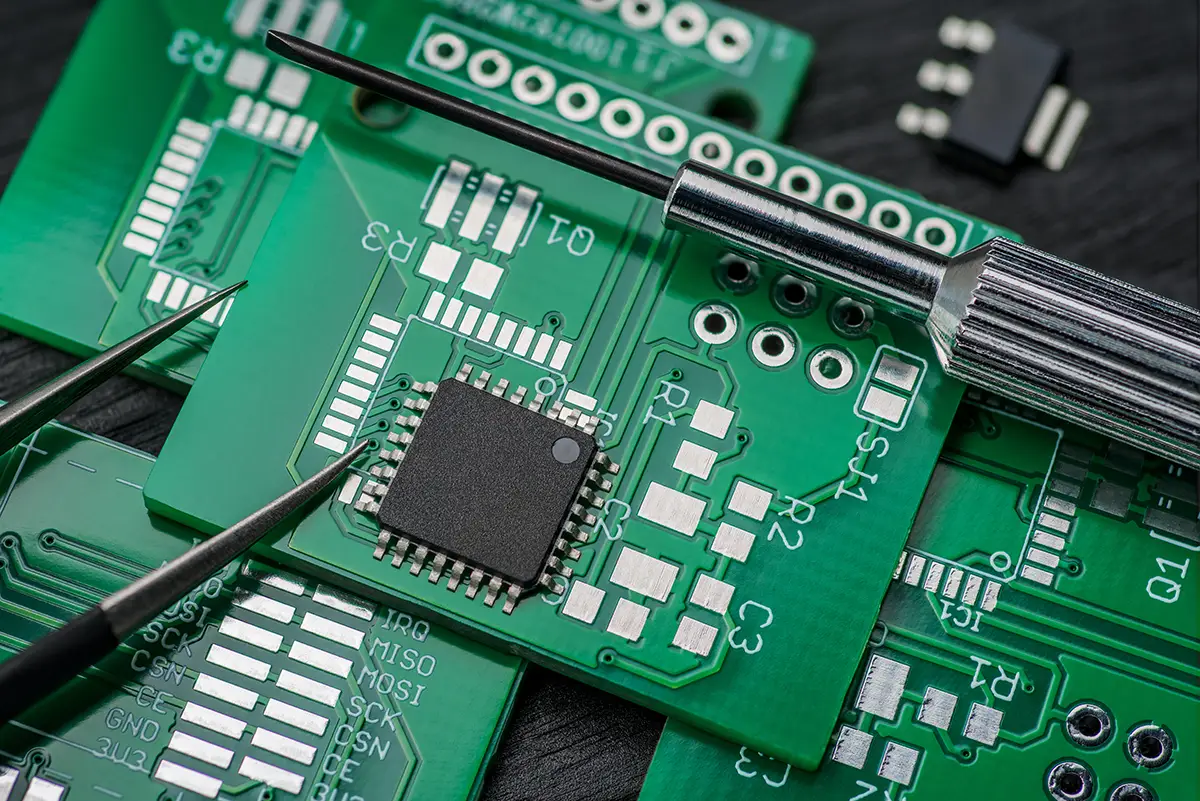
Integrated circuit (IC) on a printed circuit board (PCB).
What an SoC Actually Integrates
That integration is what sets an SoC apart. What would traditionally have been multiple separate components, namely a CPU, memory controllers, I/O interfaces, and specialized processing cores, all sit on the same silicon die. Signals between the CPU and the memory controller do not travel across a PCB trace; they travel across a metal interconnect measured in nanometers. This has direct consequences for power efficiency, signal integrity, and physical size.
A typical SoC used in Edge AI applications includes several distinct subsystems:
CPU Cluster
The CPU cluster handles general-purpose computation, including the operating system, application logic, and communication stacks. Modern industrial SoCs typically use multi-core Arm Cortex-A architectures (Cortex-A53, A55, A72) for this layer.
Real-Time Core
A separate, lower-power processor (often an Arm Cortex-M or Cortex-R) that handles time-critical tasks with deterministic latency. On the NXP i.MX RT series, for example, the Cortex-M7 handles real-time control while a Cortex-A core manages the Linux environment. The cores share memory but operate independently, meaning a software fault on the Linux side cannot crash the real-time subsystem.
NPU (Neural Processing Unit)
The NPU is a dedicated hardware accelerator built specifically to run neural network inference. NPUs are now present in most modern Edge AI SoCs. They are fixed-function accelerators optimized for the matrix multiplication operations that dominate neural network inference workloads. Running a convolutional neural network on an NPU is typically 10–50× more power-efficient than running the same model on a CPU. The improvement comes from the NPU’s specialized architecture, which minimizes the memory bandwidth inefficiencies inherent in general-purpose processors.
Memory Controllers and I/O Subsystems
These subsystems integrate interfaces for LPDDR4/5 RAM, eMMC and SD storage, USB, PCIe, MIPI CSI (camera), MIPI DSI (display), Ethernet with IEEE 1588 timestamping, and various industrial bus protocols. Having all of these on-chip eliminates discrete bridge chips that add cost, board space, power draw, and potential failure points.
The Trade-offs That Actually Matter in SoC Selection
The datasheet comparison is the easy part. The harder part is evaluating trade-offs that only become visible during integration.
Thermal Management
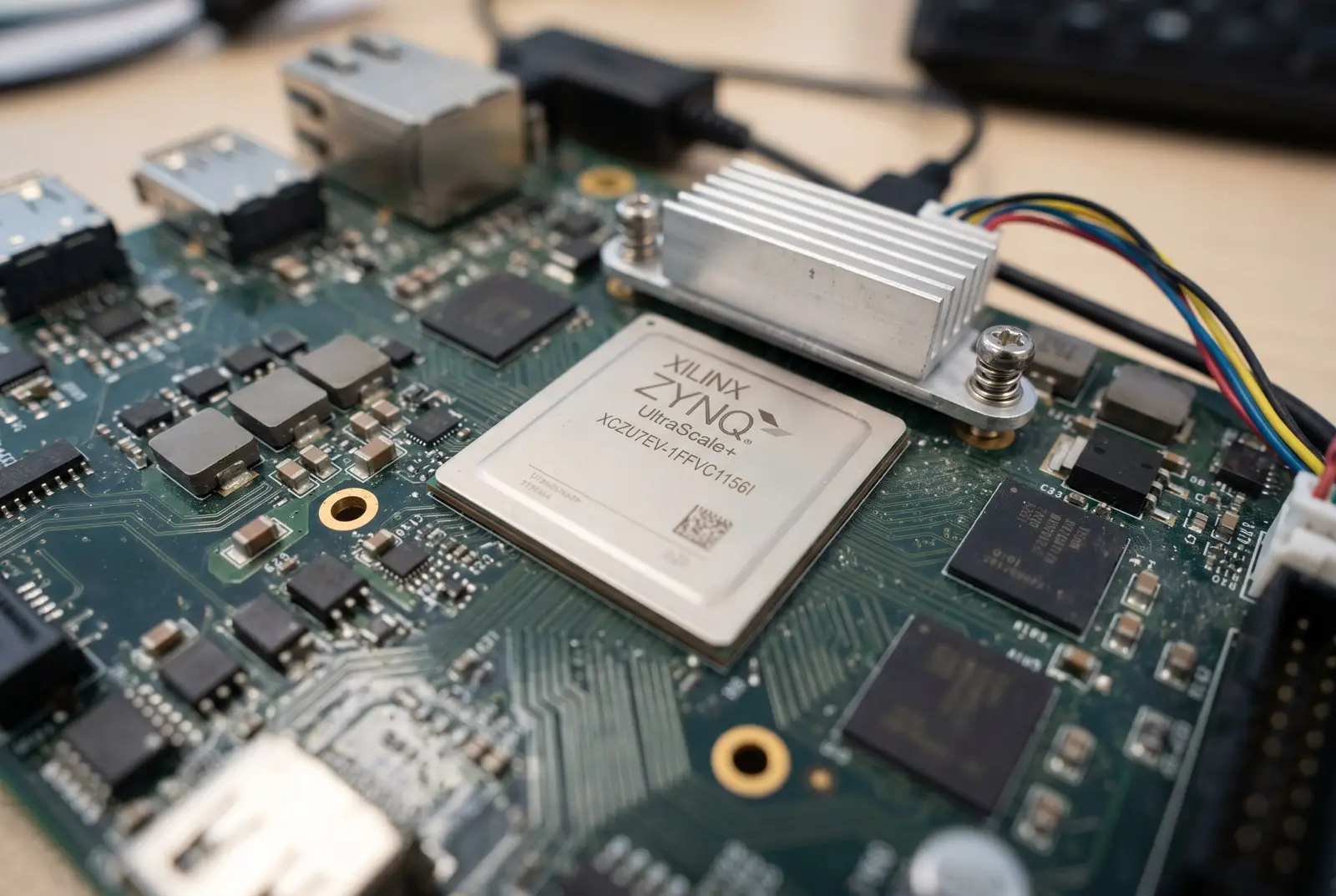
An SoC running a neural network inference loop continuously at full throughput will dissipate several watts in a package the size of a postage stamp. In a sealed industrial enclosure without active cooling, that heat has nowhere to go except through the PCB into the chassis. Thermal simulation of the entire assembly, not just the SoC in isolation, must take place before the design is finalized. This simulation belongs at the architecture phase, before PCB layout begins.
Long-Term Supply Availability
Long-term supply availability is a major constraint in industrial and medical projects where products may remain in production for 10–15 years. Consumer-oriented SoCs are often discontinued or revised within 3–5 years. NXP’s i.MX 6 series, by contrast, has maintained production and support since 2011. This is critical for customers who cannot afford a hardware redesign midway through a product lifecycle. Checking a manufacturer’s longevity commitment is a non-negotiable step in Consilia’s component selection process.
BSP (Board Support Package) Maturity
BSP maturity determines how quickly the software team can bring hardware to life. A well-supported SoC with a stable Linux BSP and active Yocto/Buildroot layers can compress bring-up time significantly. A poorly supported SoC with sparse documentation and an outdated kernel port can consume weeks of engineering time the project cannot afford.
Summary
SoC selection is a systems decision, not a component one. The right choice depends on the processing mix (general-purpose vs. real-time vs. inference), the thermal and power envelope, the longevity requirement, and the available software ecosystem. At Consilia, this evaluation happens before any schematic is drawn, because architecture decisions made at this stage determine the success of the entire platform.