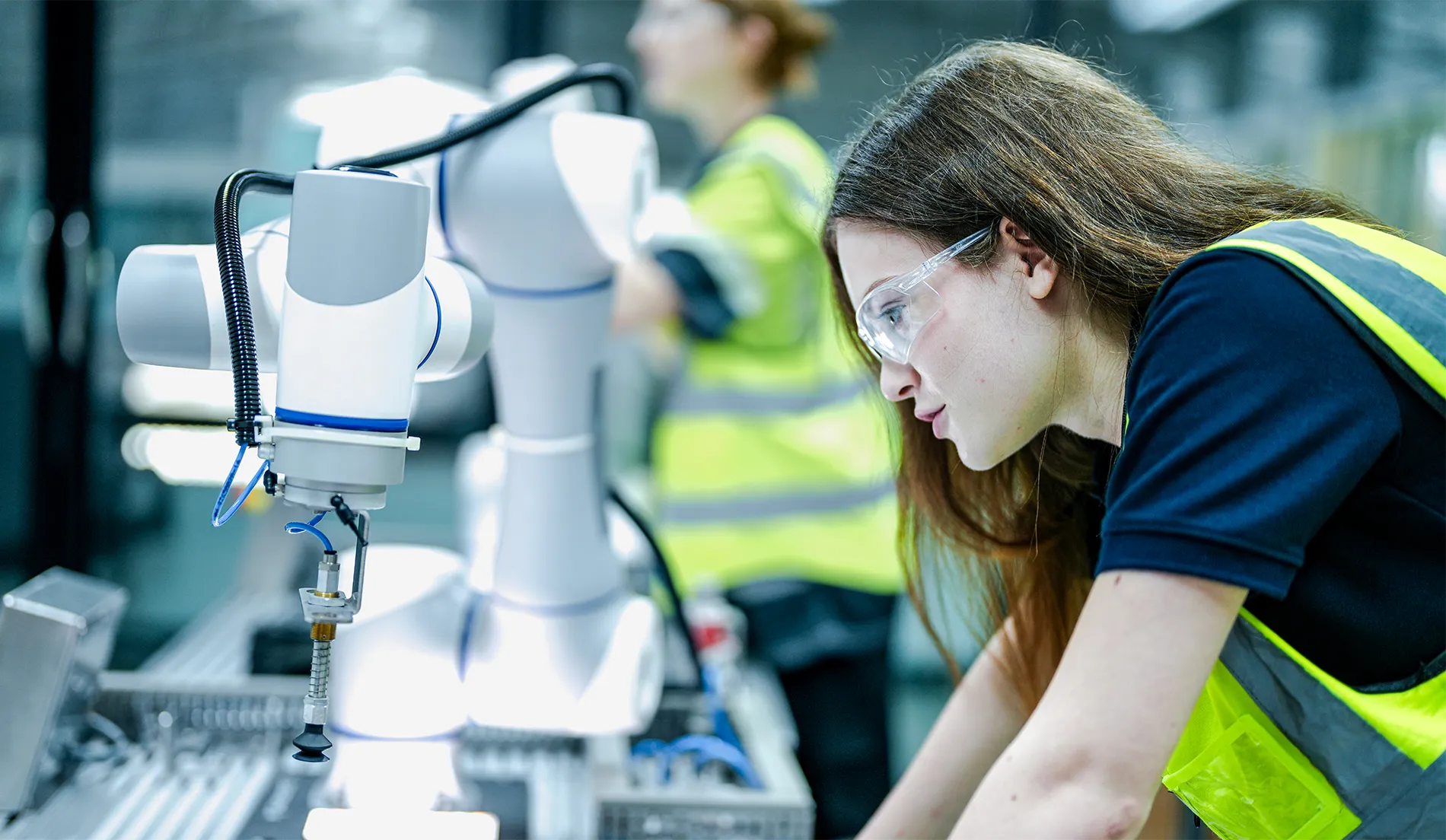


IoT and Industry 4.0
Often described as the Fourth Industrial Revolution, Industry 4.0 represents the convergence of digital technologies with physical manufacturing systems. Instead of relying on isolated machines and manual processes, modern industrial operations increasingly depend on connected equipment, automation platforms, analytics systems, and continuous data exchange.
The concept originated in Germany in 2011 as part of a national initiative focused on modernizing manufacturing through digital technologies. Since then, Industry 4.0 has evolved into a global framework for improving efficiency, flexibility, resilience, and competitiveness.
At its core, Industry 4.0 focuses on improving operational visibility and responsiveness. Organizations want to understand what is happening across production systems in real time and react faster to changing conditions.
Key characteristics include

Intelligent automation

Real-time data exchange

Interconnected production systems

Decentralized operational decision-making

Continuous industrial analytics
At the center of many Industry 4.0 environments are cyber-physical systems (CPS), where embedded computing systems continuously monitor and control physical industrial processes.
Core Technologies Behind Industry 4.0
Industry 4.0 is not a single technology. It is an ecosystem of connected technologies working together to improve industrial operations.
Key enabling technologies include

Industrial Internet of Things (IIoT)
Connected sensors and industrial machines that exchange operational data in real time.

Cyber-physical systems (CPS)
Systems combining embedded software, sensors, and industrial equipment.

Advanced analytics and machine learning
Tools used to optimize production, improve forecasting, and identify operational patterns.

Edge and cloud computing
Distributed computing architectures supporting scalable analytics and low-latency processing.

Autonomous and collaborative robotics
Robotic systems capable of operating independently or safely alongside human workers.

Digital twins and simulation
Virtual models used to test, monitor, and optimize physical systems.
Together, these technologies support the development of smart factories where machines, software platforms, and people operate within connected digital environments.
Predictive Maintenance and Intelligent Operations
One of the most widely adopted industrial IoT applications is predictive maintenance.
Modern production equipment continuously generates operational data related to vibration, temperature, pressure, power consumption, and equipment performance. Advanced analytics systems can identify patterns associated with early-stage equipment degradation before failures occur.
Instead of reacting to unexpected breakdowns, maintenance teams can schedule service during planned operational windows.
This helps organizations
- reduce unplanned downtime
- improve equipment reliability
- lower maintenance costs
- extend machinery lifespan
- improve production continuity
In industries where even short disruptions can create major financial losses, predictive maintenance has become one of the clearest business cases for Industry 4.0 investment.
The Role of Edge Computing
As industrial systems become more connected, the ability to process information quickly has become increasingly important.
Traditional cloud-based systems rely on centralized processing, where operational data is transmitted to remote servers for analysis. Edge computing shifts part of this processing closer to the source of the data — often directly within factories, production facilities, or industrial infrastructure.
This approach offers several advantages
- faster response times
- reduced network latency
- lower bandwidth requirements
- improved reliability
- enhanced security and data privacy
In high-speed manufacturing environments, even milliseconds matter. Systems capable of reacting immediately to changing conditions can improve production quality, operational efficiency, and resilience.
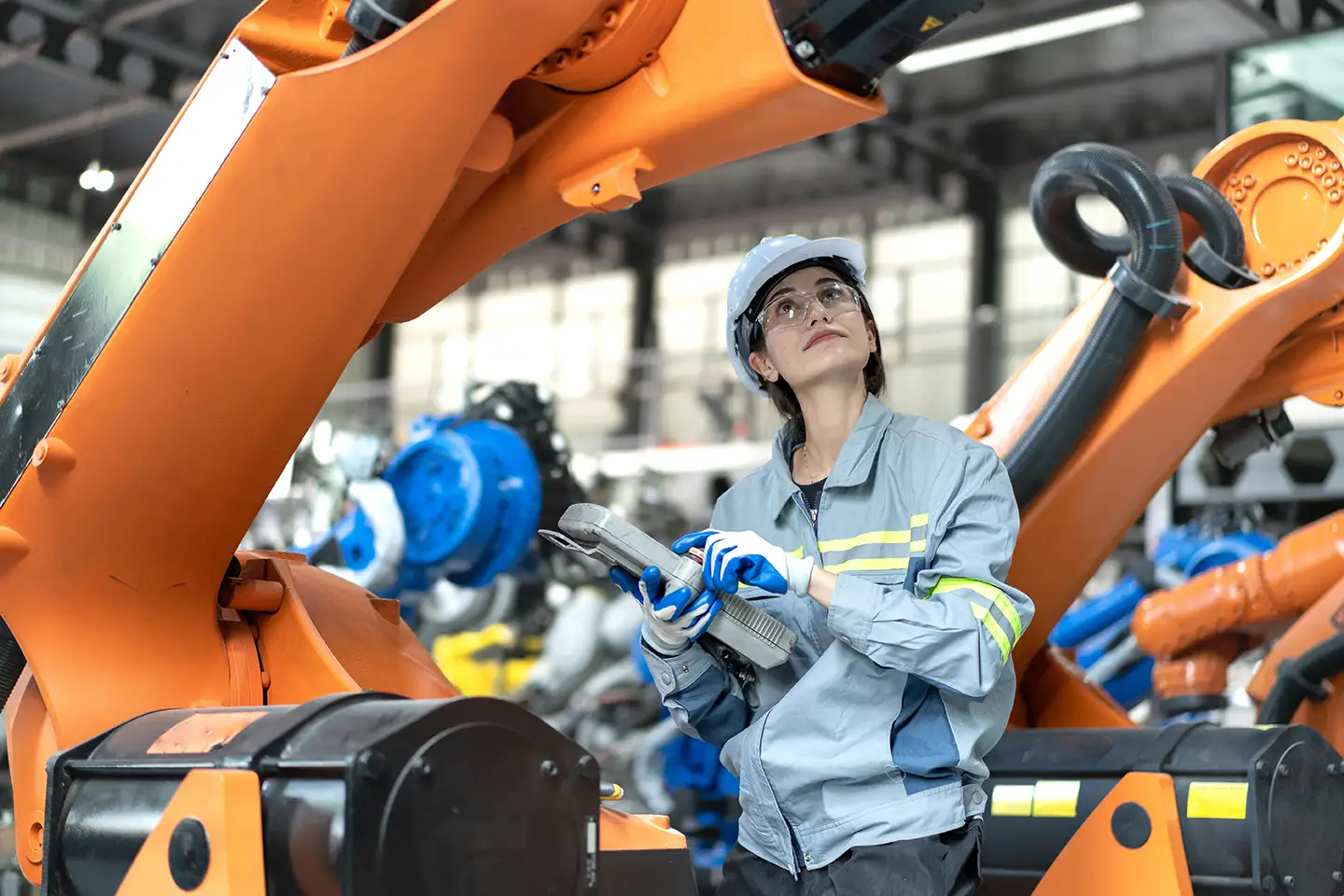
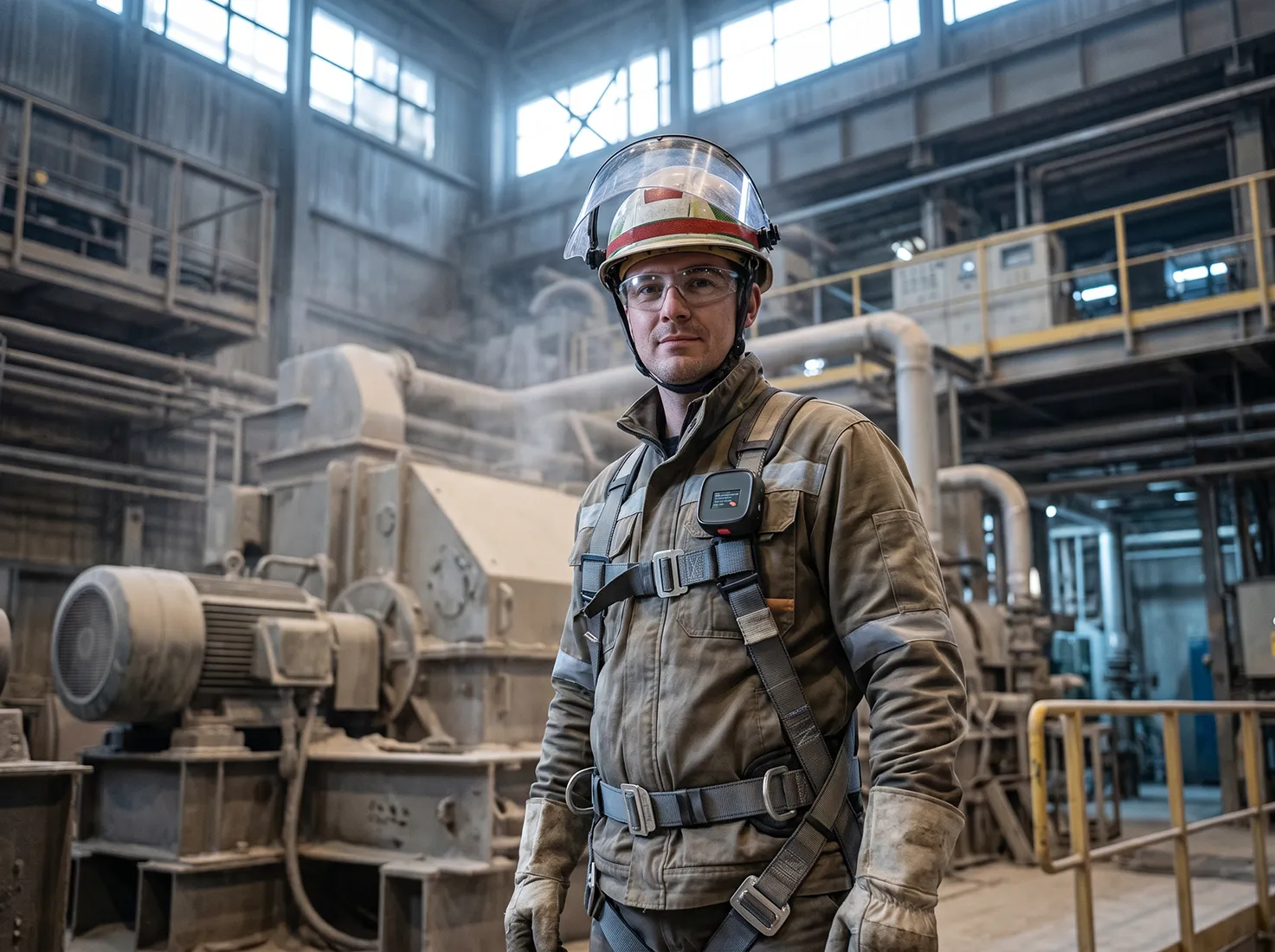
Industry 4.0 is often associated with automation, but much of the daily work is still people and machines side by side.
Human-Machine Collaboration
Despite rapid advances in automation, people remain central to Industry 4.0.
Improvements in sensing technologies, computer vision, and industrial safety systems have enabled the rise of collaborative robots (cobots), which are specifically designed to work safely alongside human operators.
At the same time, technologies such as augmented reality (AR) are helping workers perform maintenance, training, inspection, and assembly tasks by overlaying digital information onto physical environments.
Industry 4.0 is often associated with automation, but many organizations are focused on improving collaboration between humans and machines rather than eliminating human involvement entirely.
One example is German automaker BMW. The company equipped an existing production line with cobots and saw reductions in worker strain and floor space usage while maintaining existing cycle times. The cobots use sensors to track the human operator’s position, allowing people and machines to work together without the need for safety fencing.
Operational Challenges Facing Industry 4.0
As industrial IoT adoption expands, organizations must address several operational and strategic challenges.
Cybersecurity and Risk Management
As industrial systems become more connected, cybersecurity becomes both an operational and strategic concern.
Manufacturers must protect operational technology (OT) environments, industrial networks, cloud infrastructure, and connected production systems while minimizing disruptions to continuous operations.
In many industries, cybersecurity governance is also becoming increasingly important for regulatory compliance, supply-chain resilience, and long-term operational risk management.
Legacy System Integration
Many manufacturers still operate legacy equipment that was never designed for modern digital connectivity. Integrating older industrial systems with modern analytics and automation platforms creates both technical and operational complexity.
Scalability and Infrastructure
Expanding Industry 4.0 initiatives across multiple production facilities introduces significant complexity.
Organizations must manage industrial networking, connected devices, software maintenance, system interoperability, and long-term infrastructure planning at scale while maintaining reliability across distributed operations.
Workforce Adaptation
Industry 4.0 initiatives often require new technical skills related to automation, analytics, cybersecurity, and digital operations.
Successful transformation depends not only on technology investment, but also on workforce training and organizational adaptation.
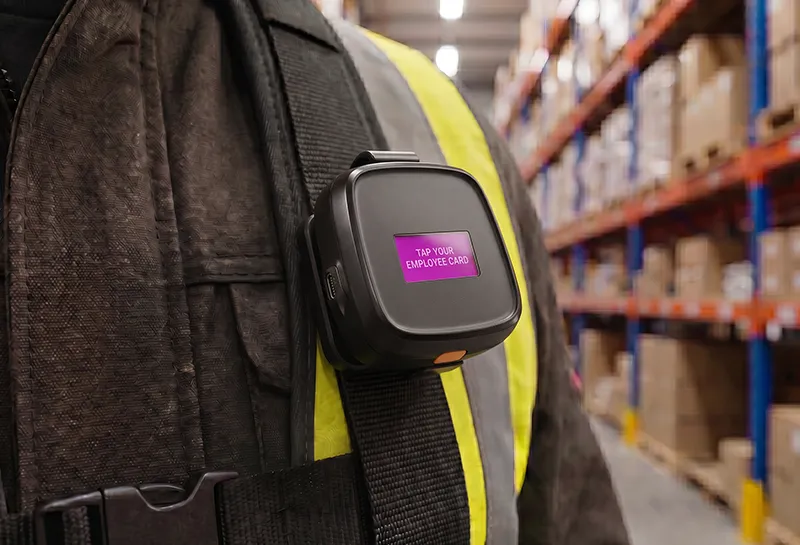
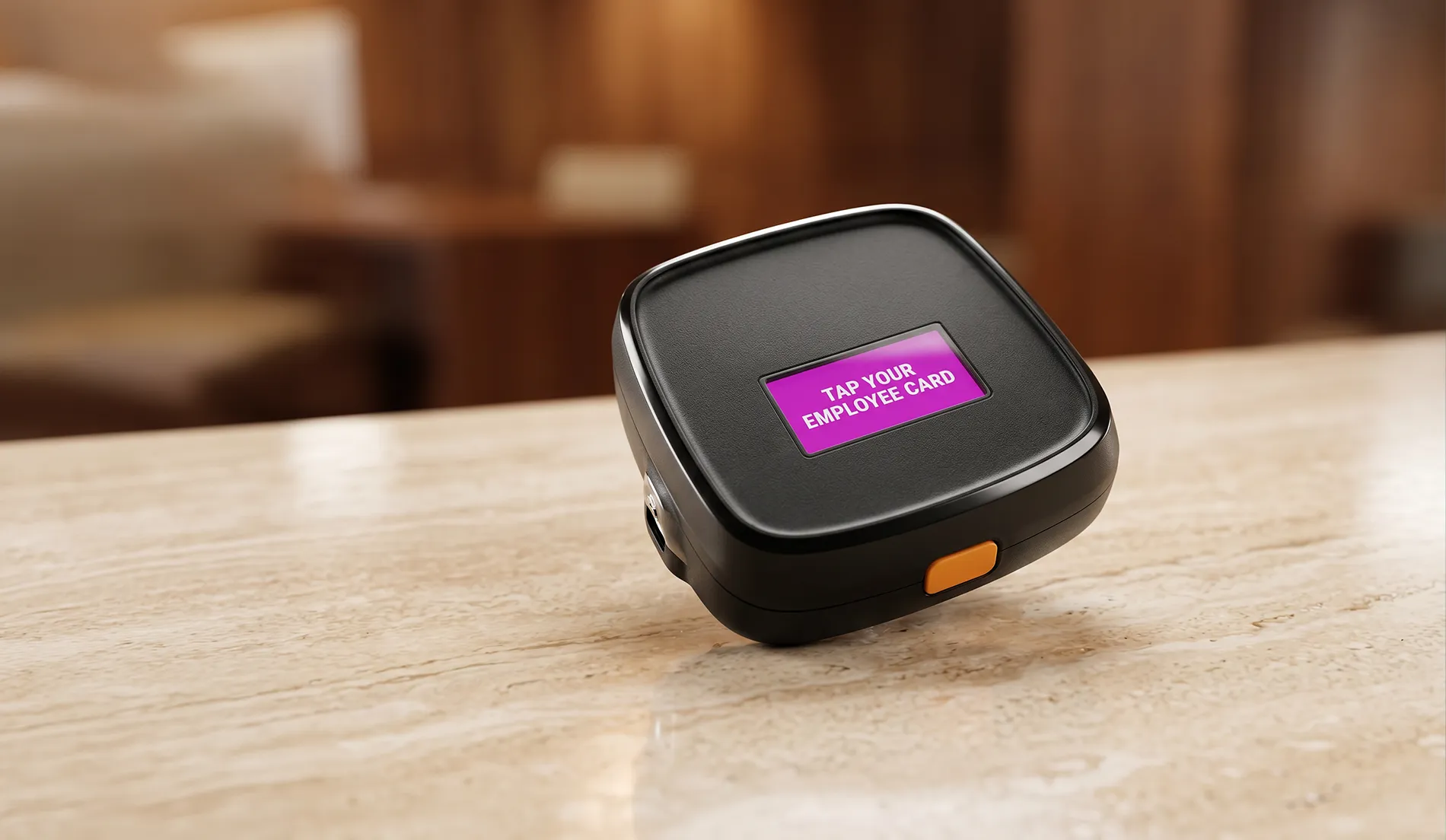
Gateway for Personal Safety, one of the connected worker devices developed with Consilia’s support.
Consilia, IoT, and Connected Worker Solutions
Connected worker technologies are becoming increasingly important in industrial environments where safety, mobility, and real-time communication directly affect performance.
Consilia develops practical IoT solutions designed for modern industrial environments, including connected worker applications.
Examples of wearable and connected worker solutions developed with Consilia’s support include
- Gateway for Personal Safety
- Neckband Earphones for Hearing Protection
- Smart Data Collecting Badge
- Smart T-shirt for Body Condition Monitoring
- Smart Headphones for Personal Safety
These technologies demonstrate how IoT can support both operational efficiency and employee well-being within connected industrial environments.
[citace]Our company often works with protocols like BLE, Zigbee, or LoRaWAN, since those protocols cover most of the needs for modern IoT systems.[citace][citace-autor]Denys Khmil, Embedded Software Engineer at Consilia [citace-autor]
Bluetooth Low Energy (BLE)
BLE is optimized for short-range communication (up to 50 m) with minimal power consumption, making it ideal for battery-operated devices that connect directly to smartphones or local gateways — without requiring dedicated network infrastructure.
It is often used in cases where approximate location calculation is needed, like asset tracking where BLE tags attached to staff badges and portable equipment allow companies to triangulate positions in real time using ceiling-mounted receivers. Or retail proximity marketing, where BLE beacons can transmit the marketing information to customers’ smartphones in proximity.
Another important use case is health and fitness wearables — devices such as heart rate monitors, smartwatches, and fitness bands use BLE to stream physiological data to a paired smartphone, enabling long-term health tracking on coin-cell batteries that can last for weeks or months.
Zigbee
This protocol operates as a low-power mesh network, where each device can act as a repeater, extending coverage without increasing infrastructure cost. It is well suited to dense networks inside buildings where many sensors and actuators need to communicate reliably over short to medium distances (up to 300 m across the mesh).
Zigbee is mostly used in home automation for things like lighting controllers, HVAC sensors, occupancy detectors, thermostats, and actuators that can be used to connect to a smart building control system. Nodes resend data to a central gateway, enabling great zone control and energy optimization. Another advantage of this network is great reliability, because a single failed node does not disrupt the rest of the system.
LoRaWAN
Low Power Wide Area Network (LoRaWAN) prioritizes range and battery life over data rate. A single gateway can cover 10–15 km in open terrain, and end devices typically transmit only small data payloads — a few bytes every few minutes — allowing batteries to last for years. It follows a star topology where devices communicate directly to gateways, which forward data to a network server.
This makes it suitable for applications in agriculture like soil moisture, temperature, and nutrient level monitoring. It is also useful in smart city applications like water, gas, and electricity meters, automatic readouts, streetlight controllers, air quality monitoring, etc.
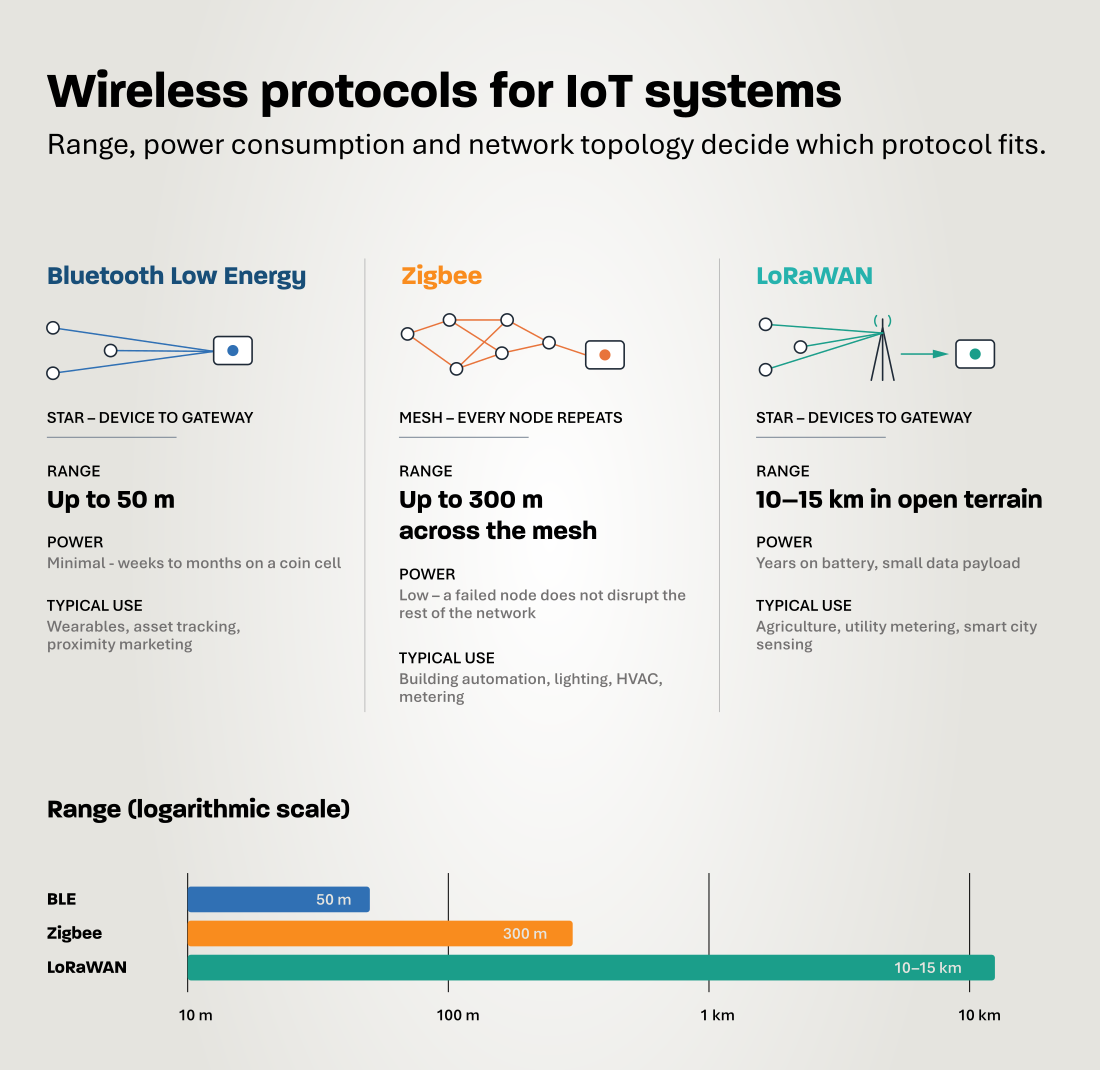
Wireless protocols for IoT systems: range, power consumption and network topology


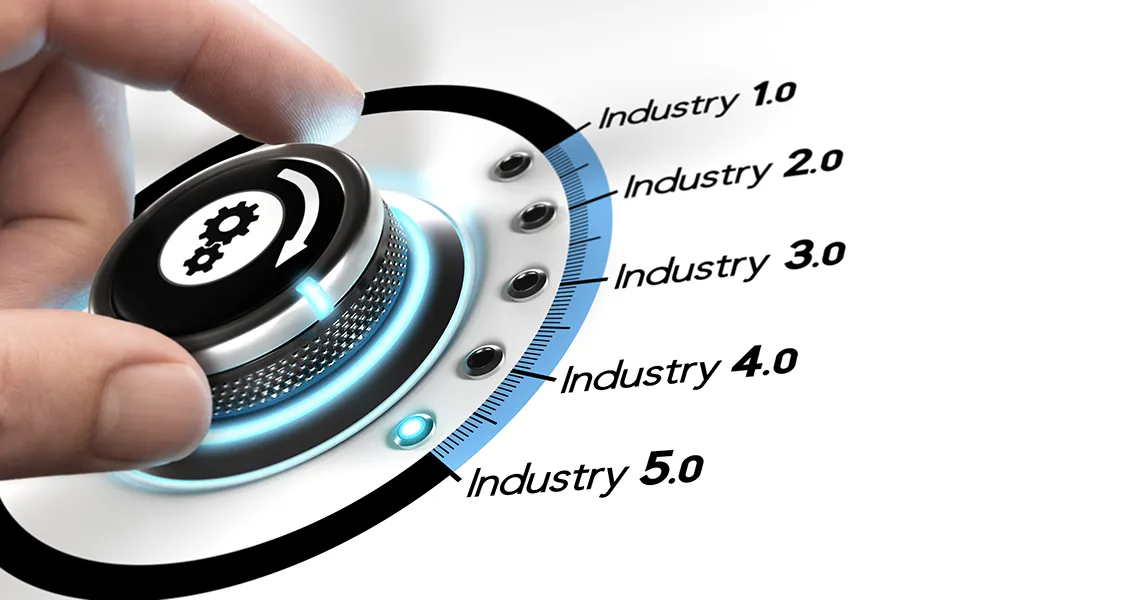
From Industry 4.0 to Industry 5.0
As digital transformation continues to evolve, Industry 5.0 is emerging as the next stage of industrial development.
Rather than replacing Industry 4.0, Industry 5.0 builds upon it by emphasizing the role of humans in advanced technological systems. The concept is strongly promoted in Europe and focuses on three key principles:

Human-centricity
Placing human needs and skills at the center of technological systems.

Resilience
Creating manufacturing systems that can adapt to disruptions.

Sustainability
Reducing environmental impact and promoting responsible resource use.
Comparing Industry 4.0 to Industry 5.0
Industry 5.0 aims to combine the efficiency of advanced automation with the creativity, adaptability, and decision-making capabilities of humans.
The Bigger Picture — and the Road Ahead
As connected technologies continue to evolve from Industry 4.0 to 5.0, the role of IoT continues to expand across industries.
In many ways, IoT is becoming the digital nervous system of modern infrastructure. By combining sensing, communication, analytics, and automation, connected systems are reshaping how organizations monitor operations, respond to change, and make decisions.
From smart factories and intelligent infrastructure to connected worker platforms, IoT and Industry 4.0 technologies are driving the next generation of industrial transformation.
For manufacturers and industrial organizations, the question is no longer whether connected technologies will shape operations, but how quickly companies can integrate them effectively, securely, and at scale.
Organizations that successfully combine connectivity, analytics, automation, and human-centered technologies will be better positioned to improve resilience, efficiency, and long-term competitiveness.

Case studies
Related Consilia projects
Gateway for Personal Safety
The gateway helps to aggregate data from various smart personal protection devices and upload it to a cloud for further processing. Learn more in case study.

Smart Data Collecting Badge
We created a device the size of a slightly thicker ID card, and fitted it with all the electronics, incl. the BLE chip, LED stuff, battery, and charging circuits.

Smart Headphones for Personal Safety
In hardware design, we focused on scalability and power consumption to enable a fine balance between battery life and computing power.