

What exactly is a Small Language Model?
An SLM is a language model built on the same transformer architecture as its larger counterparts but significantly reduced in size. While large models may contain tens or hundreds of billions of parameters, SLMs typically range from hundreds of millions to around ten billion parameters.
Model compression is achieved through several techniques. Pruning removes less important neurons or weights that have minimal influence on the output. Quantization converts precise 32-bit floating-point values into lower-precision formats such as 16-bit or 8-bit representations, reducing memory requirements while improving inference efficiency. Knowledge distillation transfers the behavior and decision patterns of a large “teacher” model to a smaller “student” model, allowing the smaller model to retain much of the original capability while operating with fewer resources.
Most SLMs today are built using a combination of these approaches.
TinyML processes signals. SLMs process language.
TinyML refers to machine learning models small enough to run on microcontrollers, typically measured in tens or hundreds of kilobytes, often executing on an MCU with no operating system at all and drawing power in the milliwatt range. The models are usually compact neural networks or classical classifiers trained for one narrowly defined task: detect an anomaly in a vibration spectrum, recognize a keyword, classify a motion pattern, predict a bearing failure. The input is numeric sensor data. The output is a class, a score, or a threshold crossing.
An SLM operates in a different regime entirely. It requires an application processor with hundreds of megabytes to several gigabytes of RAM, a real operating system, and typically an NPU or embedded GPU for acceptable throughput. In exchange, it handles what TinyML cannot: language that has to be interpreted rather than classified, and output that is generated rather than selected.
| TinyML | SLM | |
|---|---|---|
| Typical model size | Kilobytes to a few megabytes | Hundreds of MB to several GB |
| Target hardware | MCU (Cortex-M class), no OS required | Application processor, NPU, embedded Linux |
| Power envelope | Milliwatts, battery-viable for years | Watts, requires a real power budget |
| Input data | Numeric sensor streams | Text, logs, transcribed speech, structured documents |
| Task scope | One fixed, predefined task | Flexible; handles tasks not explicitly trained for |
| Typical output | Class, score, threshold event | Text, summary, structured extraction, instruction |
When TinyML is sufficient, use TinyML.
If the task is classifying a known signal pattern against a defined set of outcomes, an SLM is the wrong tool. It will consume orders of magnitude more power, require far more capable hardware, and deliver no benefit. A vibration anomaly detector running a few hundred kilobytes on a Cortex-M4 is not a compromise; it is the correct engineering answer.
When TinyML is not sufficient.
The input is language, not signal.
Maintenance logs, operator notes, service reports, error messages, and voice input are text. TinyML has no mechanism for interpreting them.
The task is open-ended.
TinyML models are trained for a fixed output space. If the system needs to answer questions it was never explicitly trained on, or generate a summary rather than select a label, the TinyML architecture does not extend that far.
The system needs to produce language, not just consume it.
Explaining a fault to a technician, generating a structured incident report, or responding to a spoken query requires generation, which is outside TinyML’s scope.
In practice, the two are complementary rather than exclusive.
The most useful architecture we see is layered: TinyML at the sensor, running continuously on minimal power, detecting that something has changed. An SLM one layer up, on the gateway or the edge controller, interpreting what that event means in context, correlating it with maintenance history, and communicating it in language a human can act on.
The TinyML layer decides that something happened. The SLM layer helps explain what it means.
What is a System on Chip (SoC)?
An SoC defines embedded hardware design: CPU and real-time cores, the NPU for on-device AI inference, thermal and power limits, and long-term supply.

Engineer with a tablet in a production hall, the kind of environment where cloud-based AI often hits its limits.
Why are SLMs relevant for embedded and industrial applications?
Embedded machine learning has, until recently, been almost entirely about numeric sensor data, and TinyML remains the right tool for that layer. What SLMs add is the ability to handle language on constrained hardware, which opens a category of tasks that embedded systems previously had to send to a server. This is where the practical benefits emerge. Cloud-based LLMs are unsuitable for many industrial scenarios, not because of output quality, but because of the physical, operational, and regulatory constraints of the environment.
Latency
Cloud inference typically takes tens to hundreds of milliseconds. For systems processing machine vibrations, voice commands, or safety-critical sensor data in real time, those delays are not acceptable.
An SLM deployed directly on an SoC, such as the Zynq platform or NXP i.MX, can reduce response times from hundreds of milliseconds to near-real-time operation for specific workloads.
Security and data privacy
In medical applications or critical infrastructure, data often cannot leave the local network. Deploying an SLM directly on the device solves this problem physically because raw data is never transmitted elsewhere.
This approach can also support compliance efforts under standards such as IEC 62443 and ISO 13485 by reducing data exposure and simplifying the overall security architecture.
Power consumption
Cloud inference comes with an energy cost as well. Battery-powered or energy-harvesting devices cannot maintain a constant connection and continuously transmit data for remote processing.
An SLM can operate locally even when communication interfaces are in low-power states, activating external connectivity only when genuinely necessary.
It is worth being precise about scale here. An SLM is dramatically more efficient than a cloud round trip, but it is not a low-power technology in absolute terms. Running one continuously requires a watt-class power budget. For devices operating on a coin cell or harvested energy, TinyML remains the only viable option, and the SLM belongs further up the architecture on a mains-powered or larger-battery node.
Offline operation
Industrial environments, emergency service networks, maritime systems, and remote installations cannot always rely on continuous internet connectivity, even when satellite communications are available.
SLMs continue operating without a network connection, much like a TETRA base station can function independently of a commercial cellular network.

Miniature workers adjusting a circuit board, a metaphor for fine-tuning a model to a specific system.
What models are available today?
The SLM landscape is evolving quickly, but several models are worth highlighting from an edge hardware deployment perspective.
Phi from Microsoft (3.8 billion parameters) is designed for resource-constrained environments and is available through Azure AI Studio and Hugging Face.
Llama 3.2 from Meta offers versions with 1B and 3B parameters, including quantized versions that reduce memory requirements while improving inference performance.
Granite from IBM is available in 1B and 3B variants and is optimized for low inference latency.
Importantly, these models rarely need to be deployed exactly as delivered. Fine-tuning on domain-specific data—such as the vocabulary, operating conditions, and workflows of a particular industrial system—can significantly improve performance while keeping the model far smaller than a general-purpose LLM.

Technician with a tablet at an industrial machine. An SLM can explain a flagged anomaly in plain language.
Where does this make sense, and where does it not?
SLMs are not a universal solution, and it is worth being direct about that.
For tasks requiring broad general knowledge, complex multi-domain reasoning, or very large context windows, larger models remain the better choice. SLMs excel when the task is clearly defined and constrained.
Predictive maintenance illustrates the split well.
The detection itself belongs to TinyML: a vibration sensor evaluates FFT patterns locally and flags anomalies without streaming raw waveforms to the cloud, running on minimal power directly at the machine.
The SLM adds value in the layer above. Once an anomaly is flagged, the useful questions are linguistic rather than numerical: has this pattern appeared in the maintenance history of this machine before, what did the technician write in the service report last time, and how should this event be described to the operator on shift. That is text interpretation on unstructured, site-specific data, and it is precisely what TinyML cannot do, and an SLM can, without sending internal maintenance records to an external service.
The same architectural pattern, meaning continuous sensor input, local classification, and selective communication, is the foundation of embedded machine learning across many applications.
The same pattern appears in our own projects.
At Consilia, we have implemented similar approaches in several domains. In the Smart Headphones for Personal Safety project, on-device signal processing determines in real time whether ambient noise has reached potentially harmful levels. In the Smart Data Collecting Badge project, multiple wearable inputs are aggregated and classified locally to identify worker danger states.
In all of these cases, the same engineering principle applies as when selecting an SoC or RTOS: choose the smallest and most efficient tool that meets the requirements of the task.

Miniature figures working together on a circuit board: deploying a model takes coordinated hardware and software work.
Considering AI inference on your hardware?
Integrating a language model into an embedded or industrial system is not just a software question; it is a complex challenge that affects the entire system architecture. The decision to run AI locally influences every layer, from SoC selection and memory requirements to power budget, thermal design, and software stack optimization.
At Consilia, we design embedded systems to address these constraints at the architecture level rather than retrofitting solutions later. Selecting, compressing, and deploying a model requires coordinated work across both hardware and software disciplines.
If you are evaluating whether local AI inference makes sense for your product, contact us. We would be happy to discuss the technical realities, assess the necessary trade-offs, and help you determine whether a local solution is the right fit.


Case studies
Related Consilia projects

Smart Headphones for Personal Safety
In hardware design, we focused on scalability and power consumption to enable a fine balance between battery life and computing power.

Smart Data Collecting Badge
We created a device the size of a slightly thicker ID card, and fitted it with all the electronics, incl. the BLE chip, LED stuff, battery, and charging circuits.
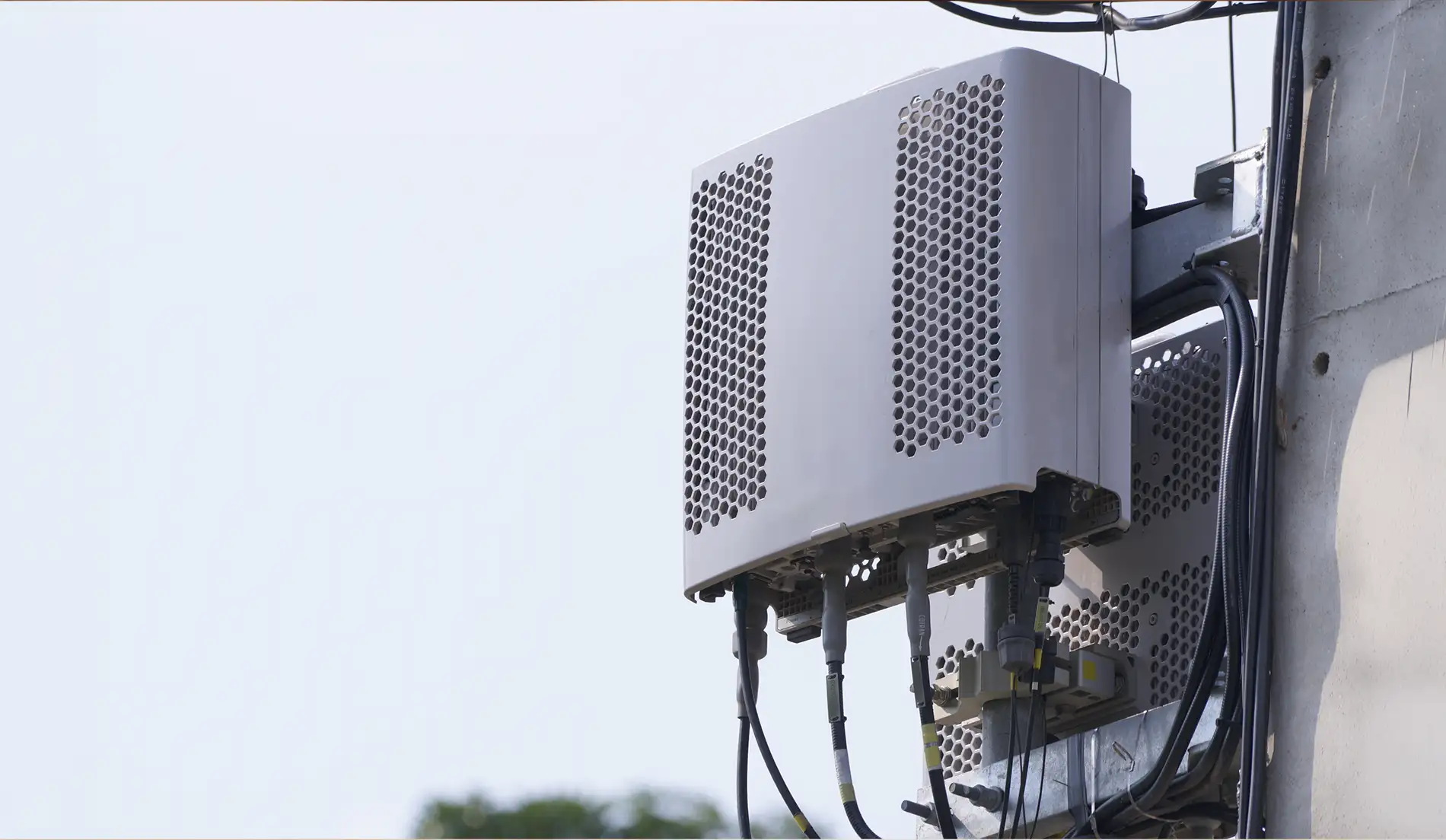
Base Station for TETRA Network
Consilia developed the whole TETRA base station. The outstanding power efficiency of our solution places the product in the top tier of competing products.